
“viand”
In English, a viand means any item of food. Filipinos have taken to translating the Tagalog word ulam as “viand” for lack of an exact one-word translation into English.
To understand this Tagalog word and the concept it represents, let’s look at a typical Filipino meal.
Cooked rice (kanin) is the basis of almost every Filipino meal. The main dish that goes with the rice is called ulam. This can be a meat dish, fried fish, or a vegetable stew.
The basic, traditional Filipino meal consists of two essential things: kanin and ulam.
If the ulam is dry (not a sinigang or nilaga that has liquid broth), then there might be a small separate bowl for soup. This is not so common though.
There are Filipinos who are so poor that they cannot afford ulam, so what they do is eat kanin with white rock salt (asin).

Adobo is a popular ulam.
In restaurants, the ulam is often served on the same plate as the rice. At home, the ulam can be in a communal dish in the middle of the table from which one can get a portion.
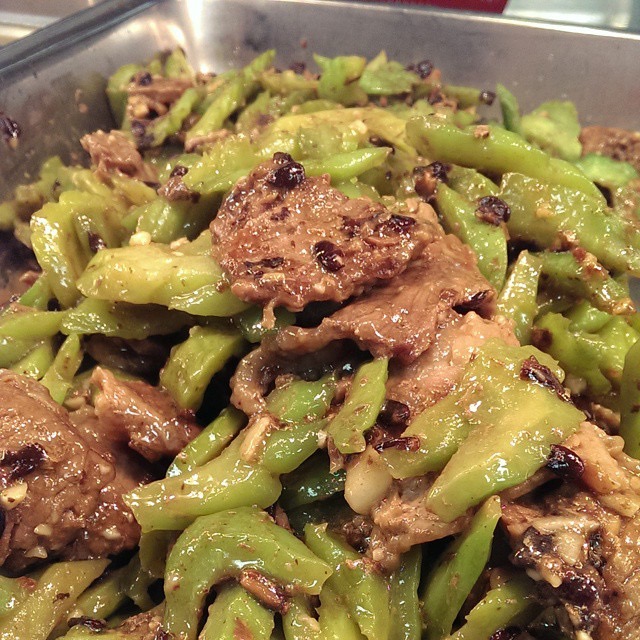
This would be delicious as an ulam.
Sometimes even just sauce can serve as ulam.
If you eat ulam without rice, you will be accused of papak.
Huwag mong papakin iyan!
Don’t eat that without rice!
KAHULUGAN SA TAGALOG
úlam: anumang putahe ng gulay, karne, at isda na karaniwang isinasabay sa pagkain ng kanin


hi i just want to ask how to pronounce viand is it “vay-and” or “vi-yand” ? thank you .
long “i”
(váy·and)
/ˈvīənd/
sa mga Tagalog… (báy·and)